




Delhi Jal Board (DJB)
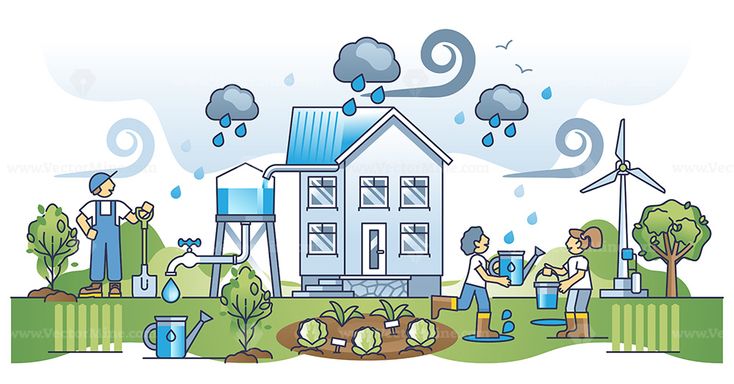
Rainwater Harvesting focuses on collecting and storing rainwater
Groundwater Recharge aims to improve
Community Participation encourages citizens,
Digital Monitoring enables smart tracking
Date: 30-01-2026
Date: 28-01-2026
Date: 25-01-2026
Date: 20-01-2026
Date: 18-01-2026
Date: 15-01-2026
Date: 12-01-2026
Date: 10-01-2026
Date: 08-01-2026
Date: 05-01-2026
| S.No. | Title | Download |
|---|---|---|
| 1 | Regarding subsidy, a flat 10% rebate is granted to those who have installed functional and adequate Rain Water Harvesting and who possess the valid RWH Certificate. | Download |
| 2 | SOP For Exemption of RWH for DJB Consumers | Download |
| 3 | Financial Assistant Scheme for promoting on Roof Top RWH system | Download |
| 4 | Design for Rooftop Rainwater Harvesting | Download |
| 5 | Public Notice on 16.02.2024 | Download |
| 6 | Public Notice on 14.02.2023 | Download |
| S.No. | District | Circle | Concerned Officer | Contact Number | Address | Latitude | Longitude | Location |
|---|---|---|---|---|---|---|---|---|
| 1 | East | SE (C)-1 | Sh. Bijender Kumar | 9650291457 | UGR: BPS, Chitra Vihar, Delhi - 110092 | 28.640771 | 77.286266 | View Location |
| 2 | North-East | SE (C)-2 | Sh. Sukhpal Chauhan | - | R-Pocket, Dilshad Garden, Delhi - 110095 | 28.684634 | 77.319401 | View Location |
| 3 | Outer North | SE (C)-3 | Sh. Himanshu Agarwal | 9650291104 | Delhi Jal Board, JE Store Bawana, Delhi - 110039 | 28.791852 | 77.029863 | View Location |
| 4 | North | SE (C)-4 | Sh. S.K. Singh | 9650291378 | Delhi Jal Board Office, Near Burari Transport Authority, Burari, Delhi - 110084 | 28.7329786 | 77.194064 | View Location |
| 5 | Old Delhi | SE (C)-5 | Sh. Anil Kumar | 9650300663 | Delhi Jal Board Office, Ramleela Ground, JLN Marg, Delhi - 110002 | 28.640425 | 77.232788 | View Location |
| 6 | Central | SE (C)-6 | Sh. Rajeev Kumar Gupta | 9650290806 | Delhi Jal Board Office, Block B, Aram Bagh, Karol Bagh, Delhi - 110055 | 28.642972 | 77.208506 | View Location |
| 7 | Central North | SE (C)-7 | Sh. Munish Kumar | 9650291227 | Delhi Jal Board MU Block, Office Complex, Pitampura, Delhi - 110034 | 28.7078 | 77.1428 | View Location |
| 8 | North West | SE (C)-8 | Sh. N.K. Verma | 9650094325 | Delhi Jal Board, D-1, Sector 15 UGR, Rohini Sec-15, New Delhi - 110089 | 28.7357054 | 77.1334866 | View Location |
| 9 | West | SE (C)-9 | Sh. B.S. Rawat | 9650094468 | Office Of The Superintending Engineer (C) 09 Twin OHT, Outer Ring Road, Paschim Vihar, New Delhi - 110063 | 28.666664 | 77.092752 | View Location |
| 10 | South-West | SE (C)-10 | Sh. Chandra Prakash | - | ZRO Office, Central Nursery, Sector-5, Dwarka, New Delhi - 110075 | 28.593595 | 77.057454 | View Location |
| 11 | South East | SE (C)-11 | Sh. Naveen Kumar Khare | - | Engineers Bhawan, Andrewsganj, Near Moolchand Crossing, New Delhi - 110049 | 28.565092 | 77.232413 | View Location |
| 12 | South | SE (C)-12 | Sh. B.C. Patel | - | DJB Office, E-Block Opposite PVR Cinema, Saket, New Delhi - 110017 | 28.522205 | 77.208669 | View Location |
Working together for water conservation and sustainable development
Fill the form below or call us directly — we're here to help you.
Helpdesk
For Any Query
TOLL FREE
Our helpdesk assists with RWH registration, inspection scheduling, compliance, and technical queries.
Helpdesk Hours
Mon – Fri | 10:00 AM – 6:00 PM
Serving 19+ million citizens with safe water & sewerage services across Delhi since 1998
Delhi Jal Board (DJB) is the Government organization responsible for providing safe drinking water and sewerage services across the National Capital Territory (NCT) of Delhi. DJB was constituted on 6th April 1998 through an Act passed by the Delhi Legislative Assembly by integrating the earlier Delhi Water Supply and Sewage Disposal Undertaking.
Since its establishment, Delhi Jal Board has been continuously working towards improving water supply infrastructure, sewerage management systems, water treatment facilities, and sustainable water resource management for millions of citizens residing in Delhi.
The organization is responsible for production, treatment, and distribution of potable drinking water, along with collection, treatment, and disposal of sewage and wastewater. DJB also promotes water conservation initiatives, Rain Water Harvesting systems, groundwater recharge activities, and environmentally sustainable urban water management practices.
Delhi Jal Board was established on 6th April 1998 to improve and modernize water supply and sewerage management services in Delhi. Prior to its formation, these services were managed by the Delhi Water Supply and Sewage Disposal Undertaking.
The creation of DJB enabled the Government of Delhi to develop a dedicated authority focused entirely on water supply, sewerage infrastructure, treatment systems, and citizen water services. Delhi Jal Board sources water from River Yamuna, Bhakra Storage, Upper Ganga Canal, and groundwater resources to ensure continuous water supply throughout Delhi.
Delhi Jal Board's mission is to provide safe, clean, and adequate drinking water to every citizen of Delhi while ensuring efficient sewerage collection, treatment, and disposal services.
Delhi Jal Board aims to build a water-secure, sustainable, and environmentally responsible Delhi through efficient water management, modern infrastructure, citizen participation, and technology-driven governance.
Delhi Jal Board remains committed to providing transparent, reliable, and citizen-friendly services while continuously improving water supply systems and environmental sustainability initiatives across Delhi.
Delhi Jal Board provides a wide range of water and sewerage-related services for citizens across Delhi, operating through approximately 41 Revenue Zones (ZROs) for water billing, consumer management, and citizen services.
Delhi Jal Board actively promotes water conservation and sustainable water management initiatives through programs such as "Catch The Rain" and "Jal Jeevan Mission". With a vast distribution network consisting of water treatment plants, underground reservoirs, pumping stations, and extensive pipeline systems, DJB serves a population of more than 19 million citizens across the city.
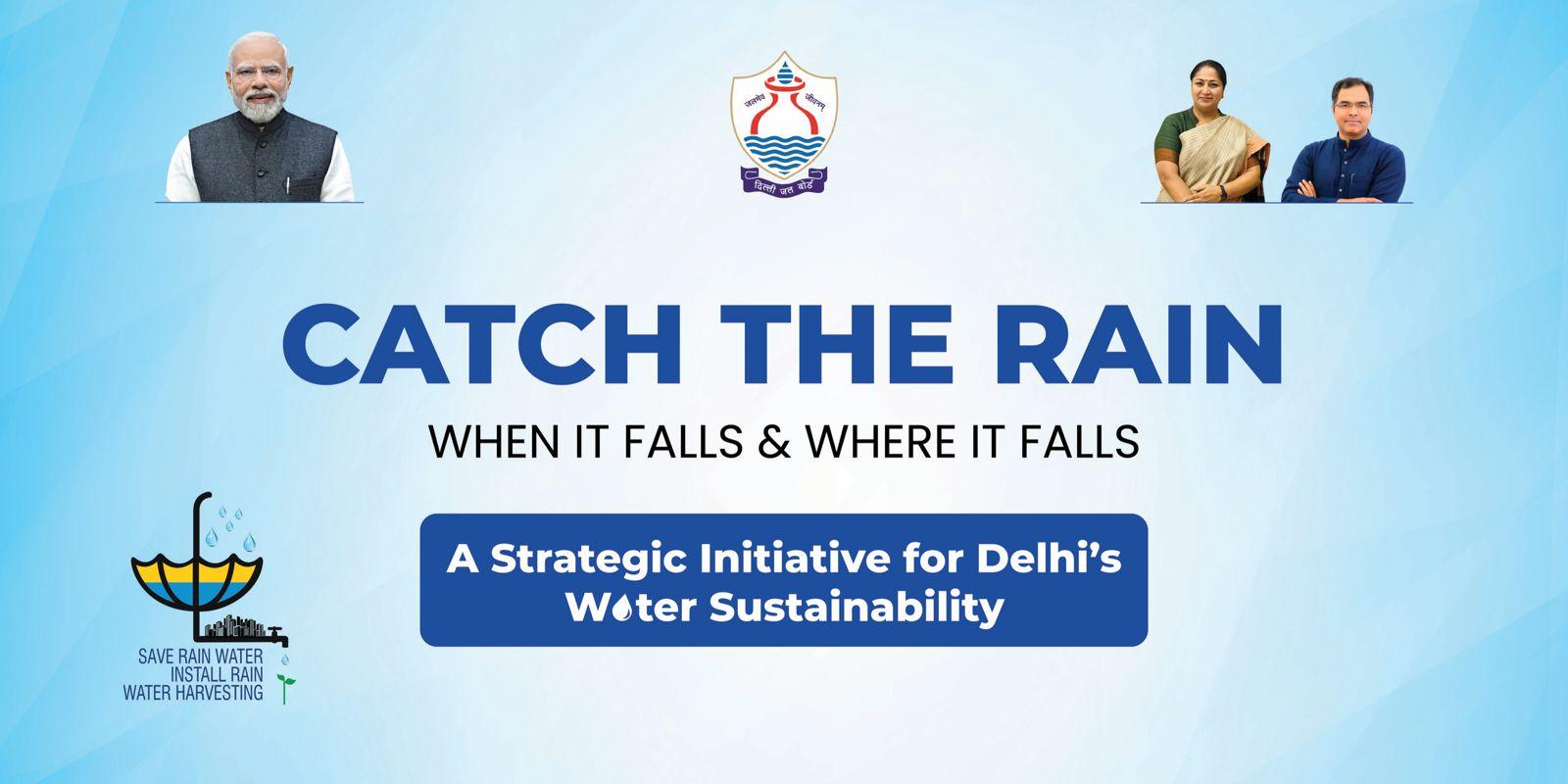
"Catch the Rain – Where It Falls, When It Falls" — A Delhi Government initiative for water security
Water is one of the most valuable natural resources for human life, environmental sustainability, and economic growth. With rapid urbanization, increasing population, rising water demand, and declining groundwater levels, the need for sustainable water management has become more important than ever before.
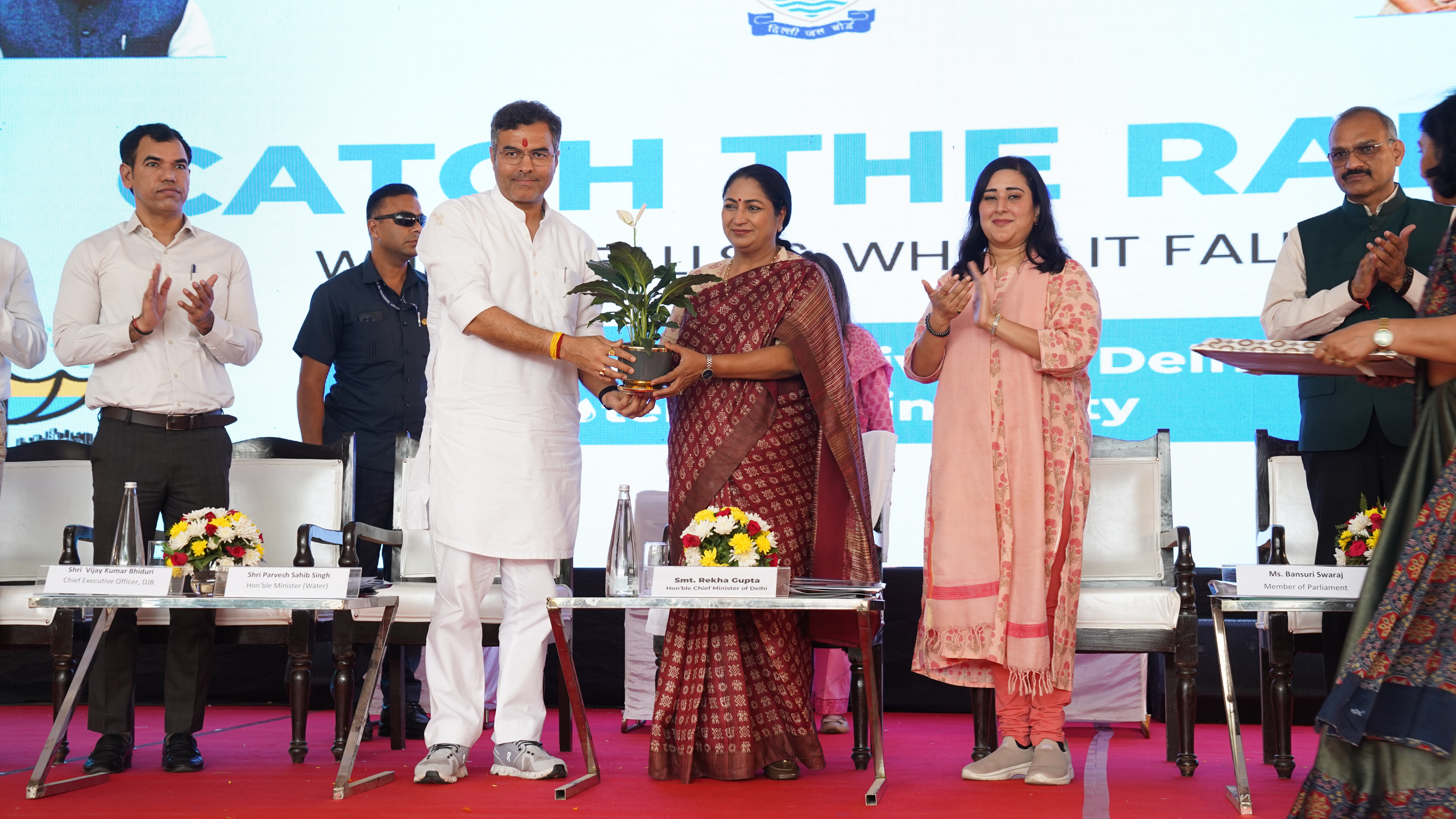
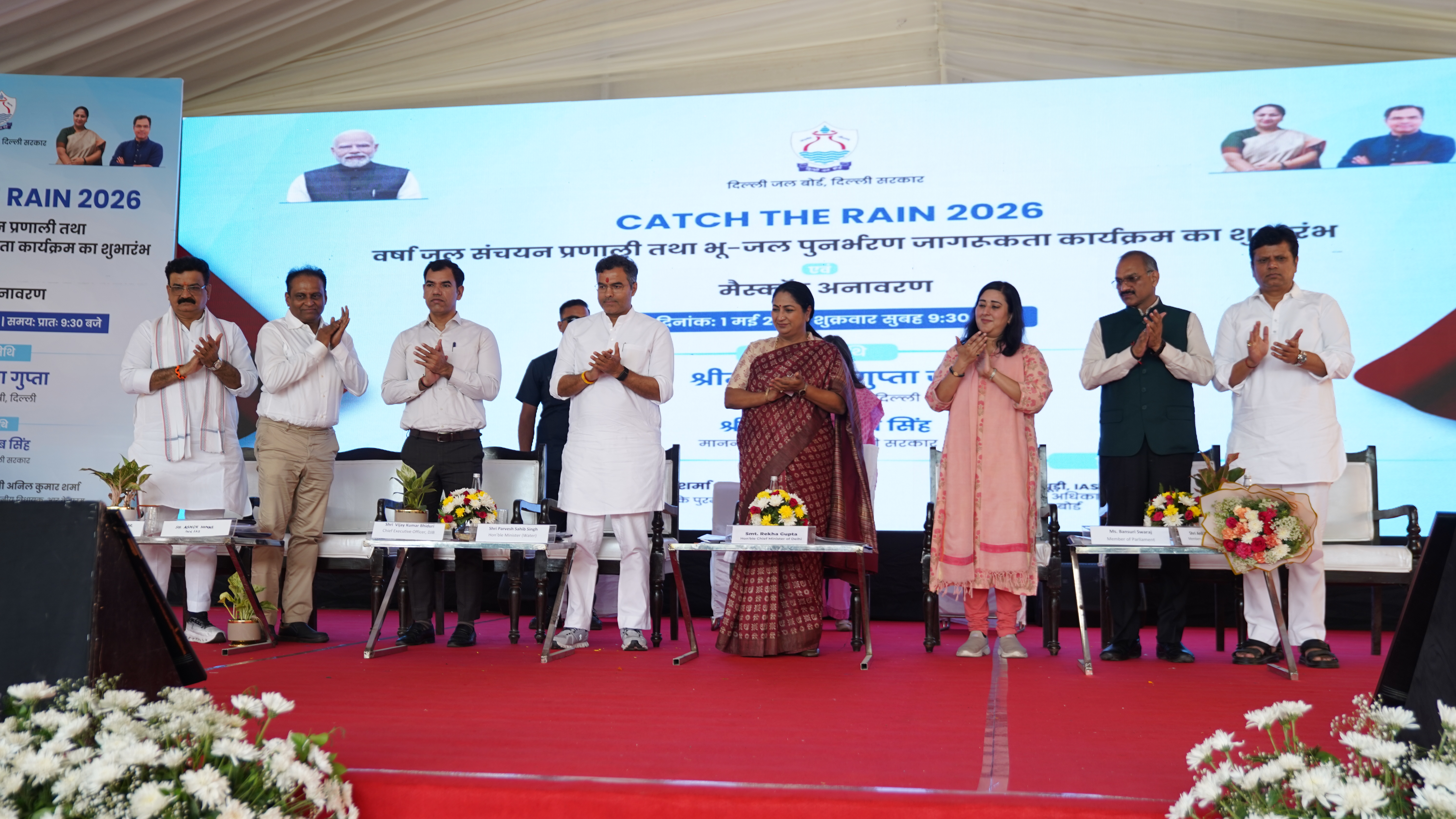
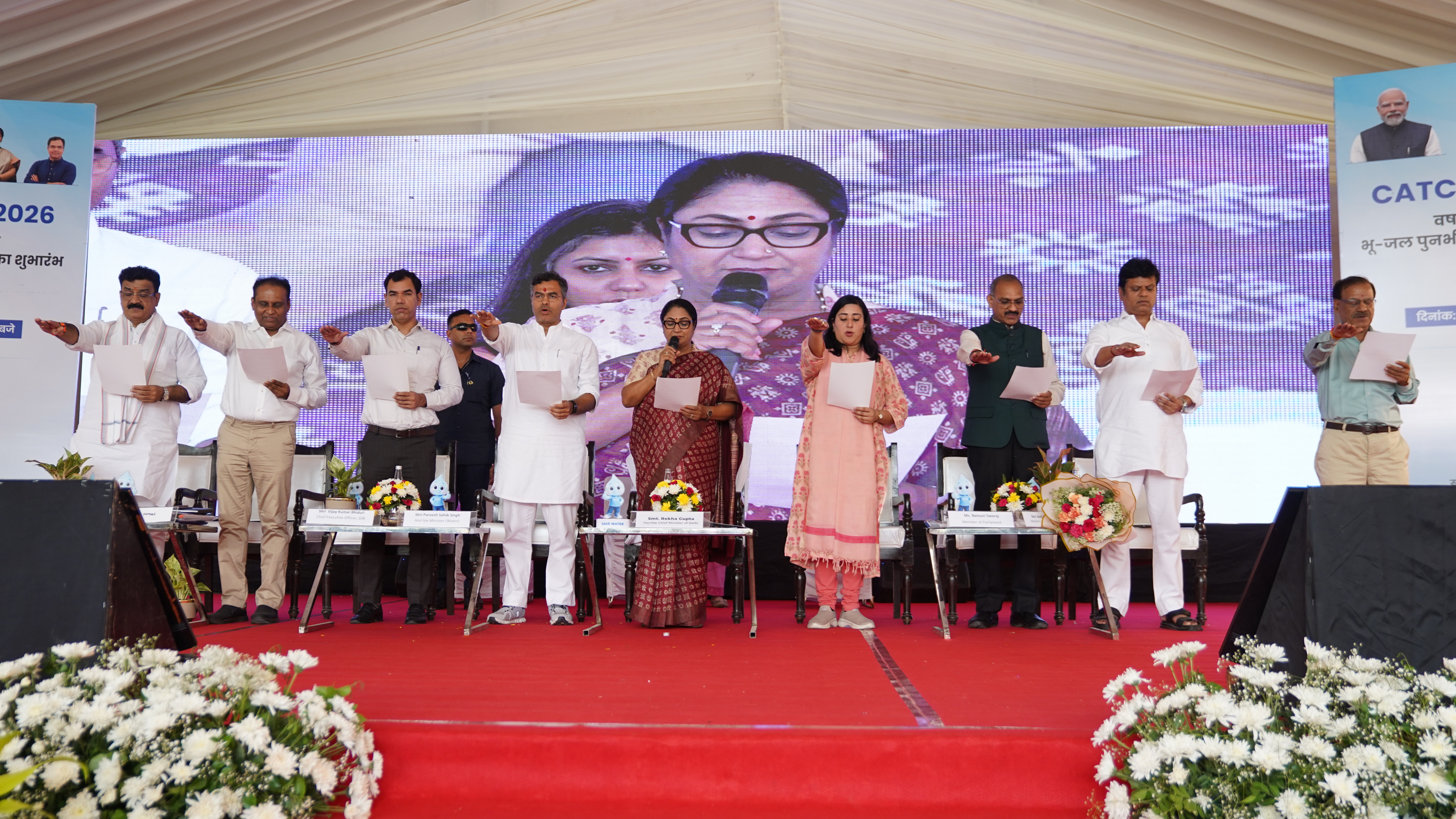
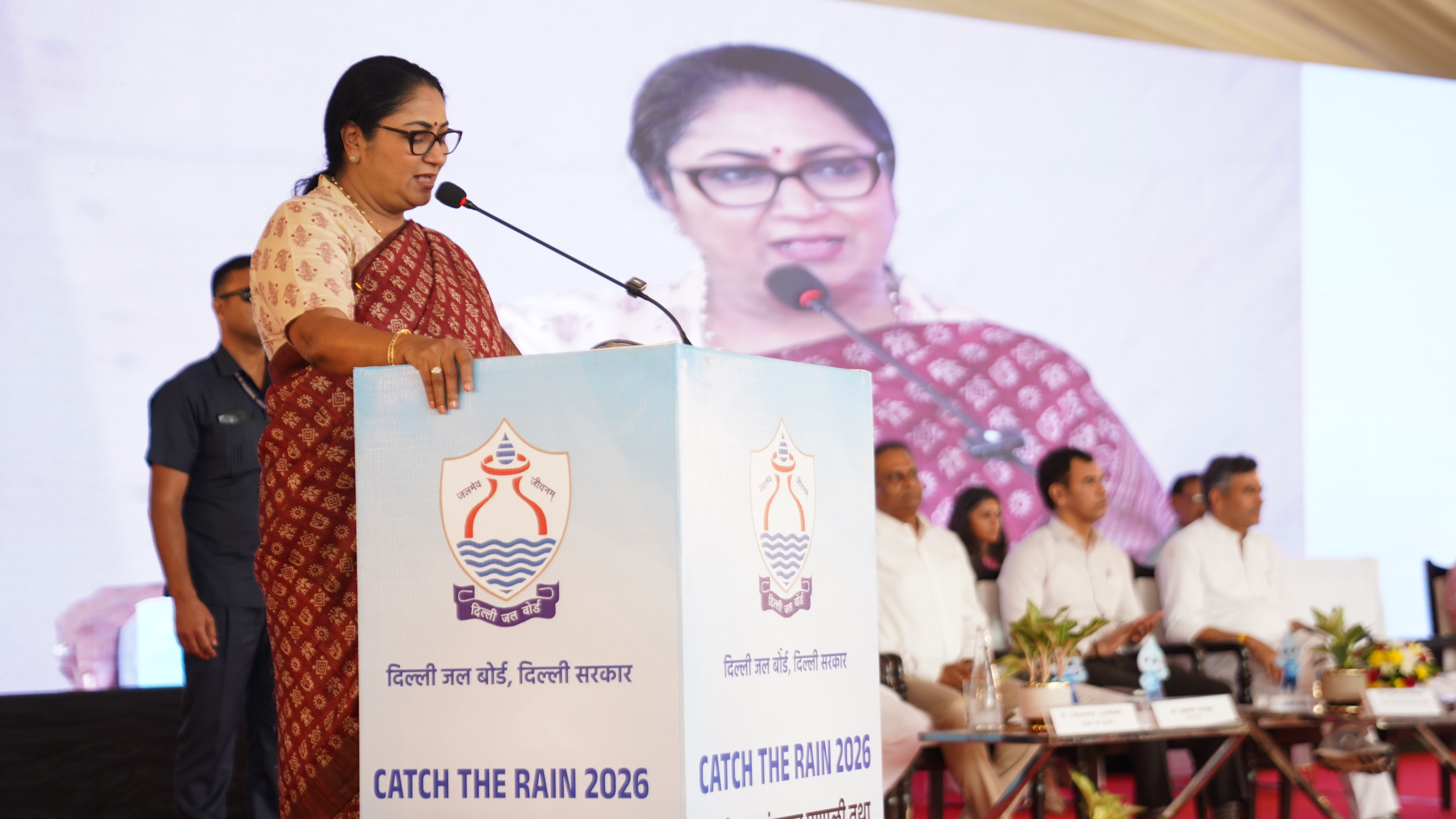
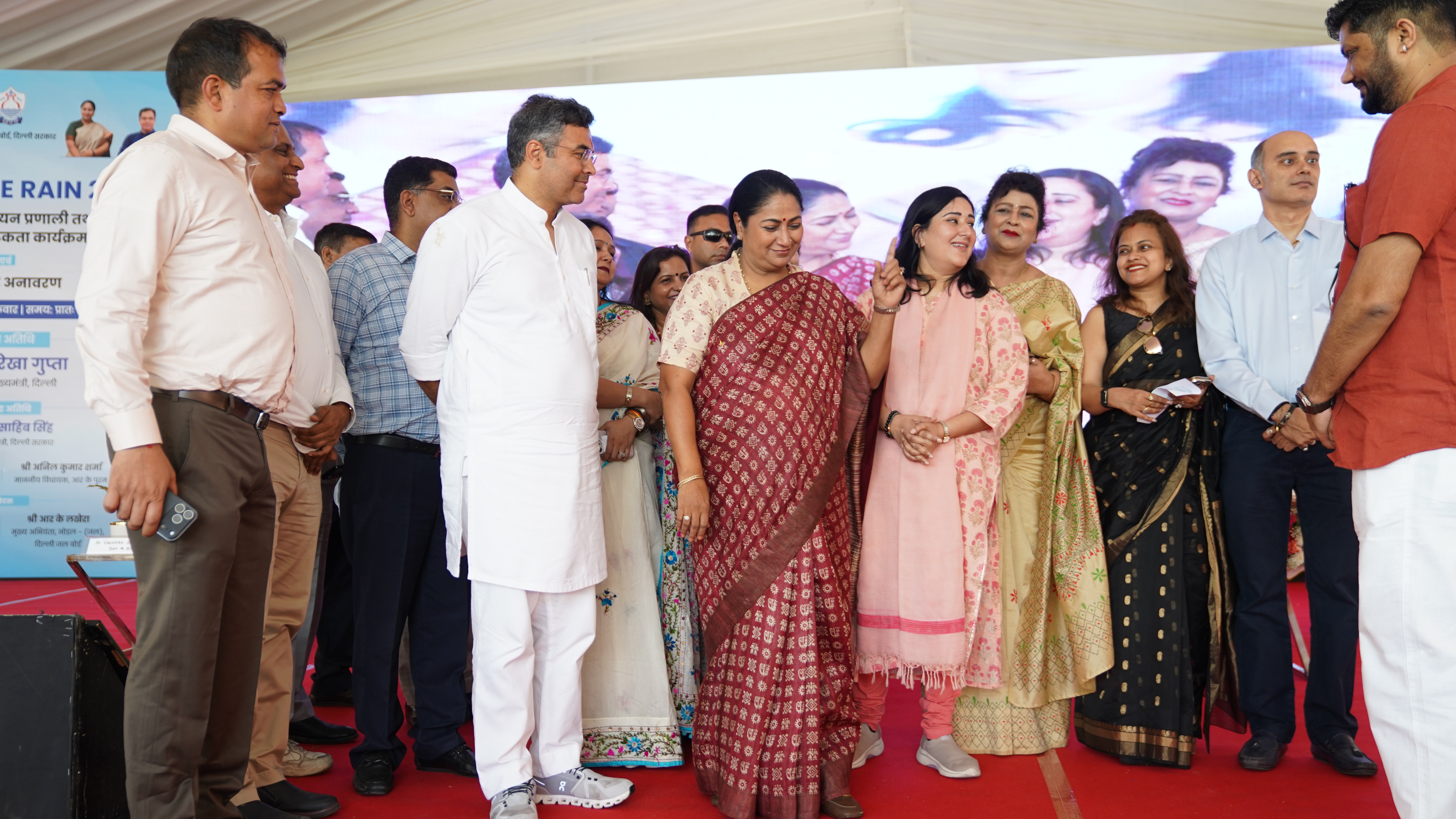
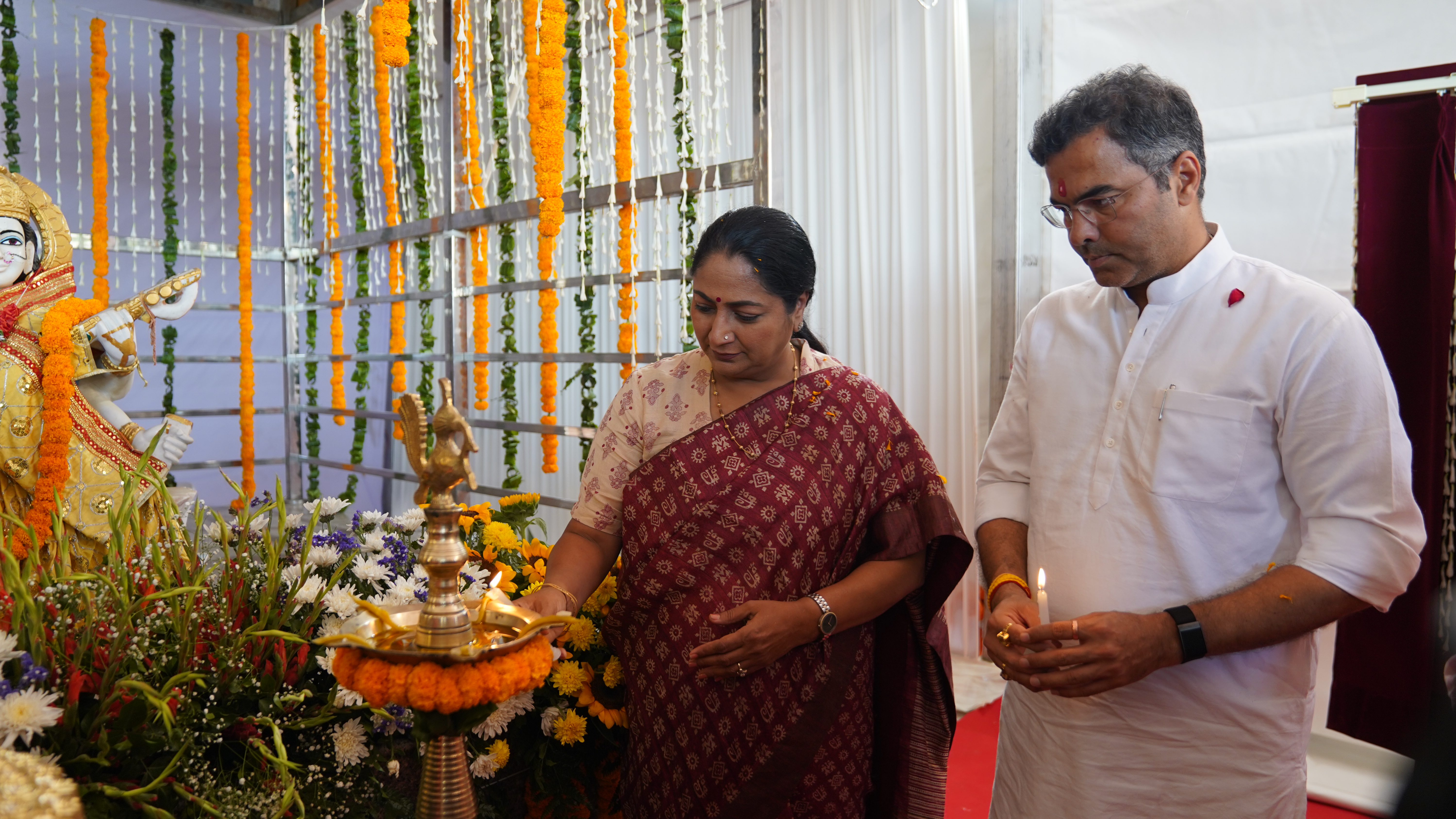
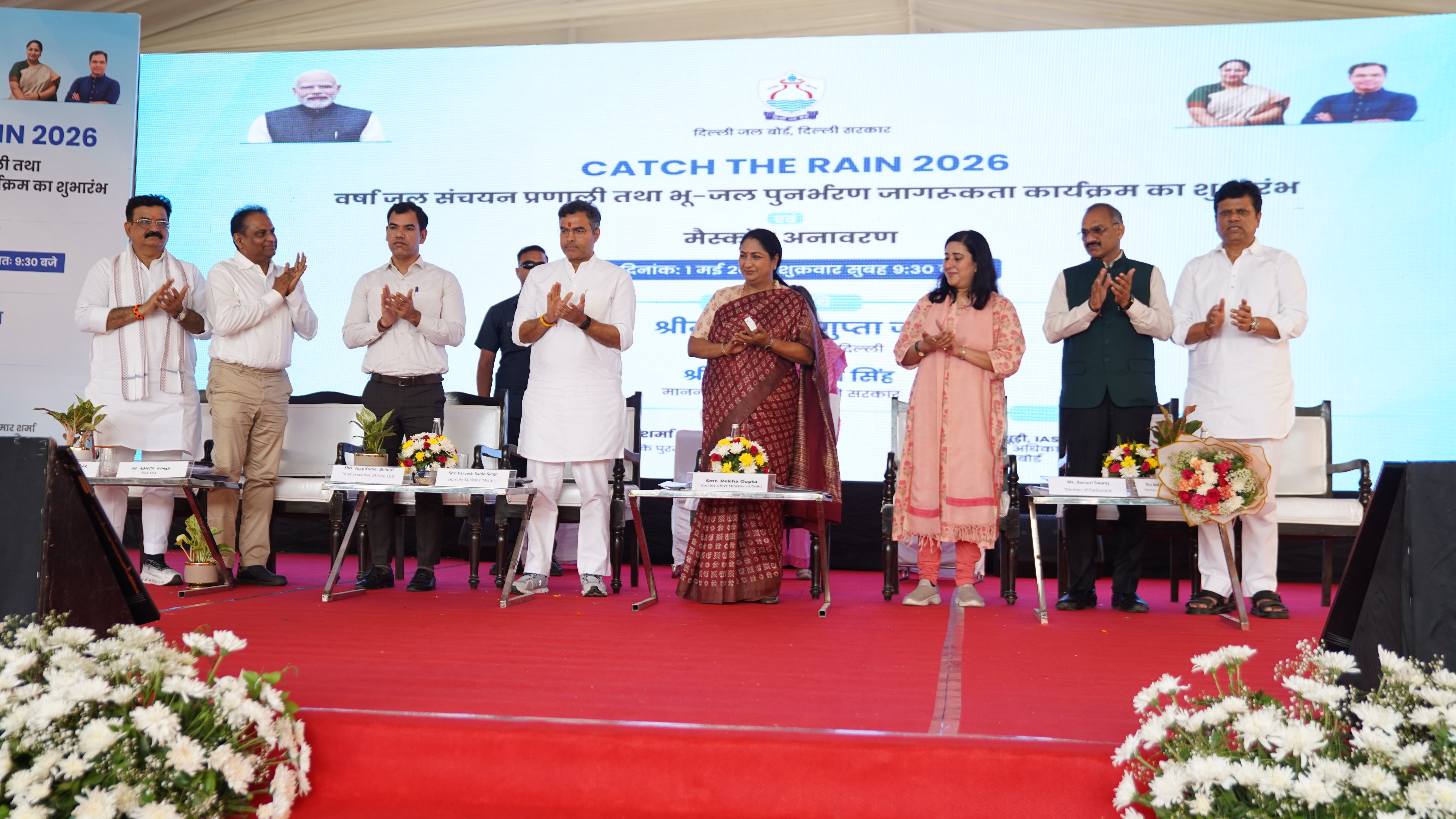
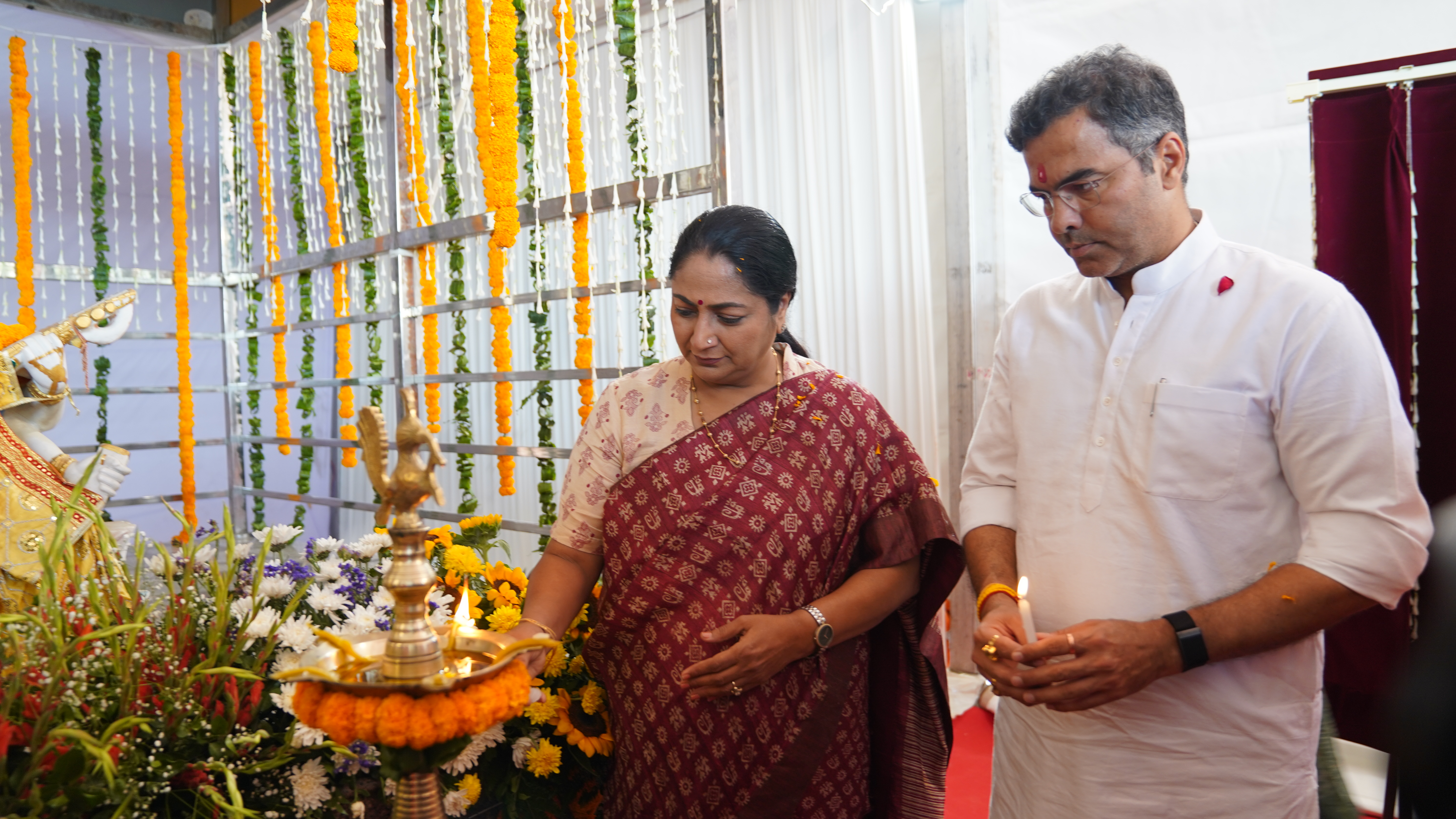
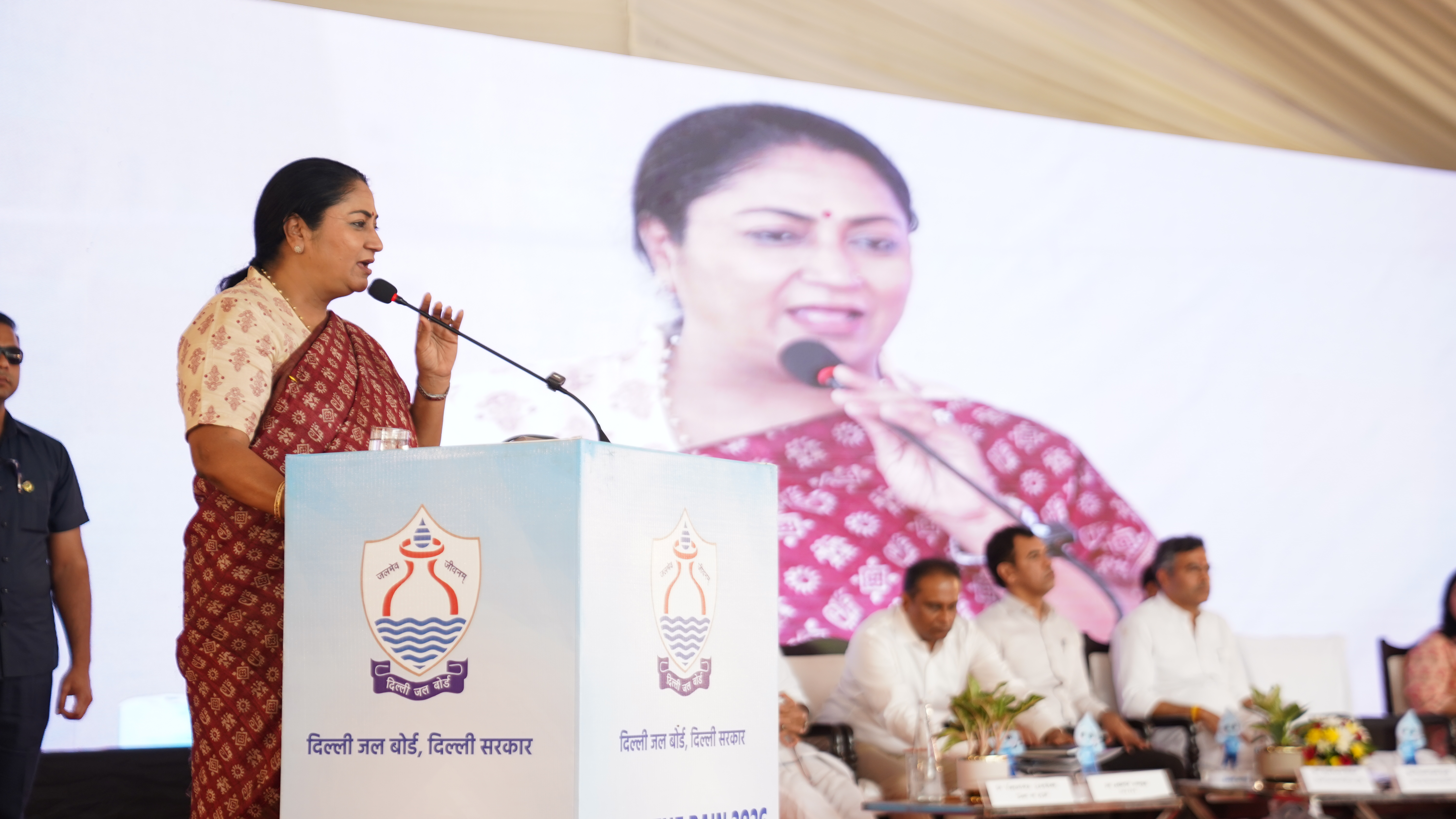
In response to these growing challenges, Hon'ble Chief Minister Rekha Gupta has launched the ambitious "Catch The Rain 2026" on May 1, 2026 to strengthen water conservation efforts and promote Rain Water Harvesting (RWH) across the city.
This initiative encourages every citizen, institution, residential society, commercial establishment, and government organization to actively participate in rainwater conservation and groundwater recharge activities.
Delhi continues to face increasing pressure on its water resources due to rapid urban expansion, declining groundwater levels, increasing dependency on freshwater sources, irregular rainfall patterns, climate change impacts, and rising domestic and commercial water consumption.
Large quantities of rainwater are lost every year due to surface runoff, resulting in water wastage and reduced groundwater recharge. The campaign follows the national vision of: "Catch the Rain – Where It Falls, When It Falls"
The Delhi Government has introduced mandatory Rain Water Harvesting provisions for buildings having a plot area of 100 square meters or more.
Eligible citizens and property owners may receive financial assistance and rebate benefits under the initiative.
Delhi Jal Board (DJB) plays a central role in implementation and monitoring of the "Catch The Rain 2026" campaign.
The success of "Catch The Rain 2026" depends heavily on active public participation and community involvement.
The initiative focuses on modern digital governance and technology-based monitoring systems for better implementation and transparency.
"Catch The Rain 2026" is not just a campaign — it is a movement towards sustainable living, environmental responsibility, and collective water security.
"Every Drop Saved Today Secures Tomorrow."
A Nationwide Movement for Water Conservation & Sustainable Water Management
Water is one of the most critical natural resources for human survival, agriculture, economic development, and environmental sustainability. With increasing population, rapid urbanization, climate change, and rising pressure on groundwater resources, water conservation has become a national priority for India.
To address the growing challenge of water scarcity, the Ministry of Jal Shakti, Government of India launched the nationwide initiative: "Jal Shakti Abhiyan: Catch The Rain"
The campaign was introduced with the vision of encouraging citizens, institutions, communities, industries, and local authorities to conserve rainwater and strengthen groundwater recharge systems through active public participation.
The initiative follows the powerful national message: "Catch the Rain – Where it Falls, When it Falls" — promoting collection, storage, conservation, and reuse of rainwater at the local level before it flows away as runoff.
The Ministry of Jal Shakti initially launched the Jal Shakti Abhiyan (JSA) in 2019 in 256 water-stressed districts covering 1,592 blocks across India. The campaign was designed to accelerate water conservation activities through coordinated efforts of central ministries, state governments, district administrations, experts, and local communities.
In 2020, the Government introduced the "Catch The Rain" campaign to continue promoting Rain Water Harvesting. In 2021, it evolved into "Jal Shakti Abhiyan: Catch The Rain (JSA: CTR)" and has since become an annual nationwide movement covering all districts, rural blocks, and urban areas across India.
The vision is to create a water-secure India through comprehensive water management and citizen participation:
The campaign focuses on initiating and accelerating water conservation at the grassroots level:
The campaign promotes construction and restoration of Rain Water Harvesting structures for collection, storage, and recharge of rainwater. Citizens are encouraged to install rooftop RWH systems and adopt sustainable water conservation methods suitable to local climatic conditions.
The campaign supports identification, geo-tagging, mapping, and digital inventory management of water bodies. Scientific planning is carried out using:
District-level knowledge and awareness hubs ("Jal Shakti Kendras") are established for water conservation guidance, technical support, RWH awareness, citizen engagement, and capacity building activities.
The campaign promotes plantation and afforestation activities around water bodies, catchment areas, public spaces, and community lands to improve groundwater recharge, strengthen ecological balance, and reduce soil erosion.
A major focus is public awareness and citizen participation through:
The campaign has expanded over the years to include several special intervention areas:
Jal Shakti Abhiyan is a movement towards making water conservation a "Jan Andolan" — a People's Movement — ensuring a water-secure India for generations to come.
Visual highlights of Delhi Jal Board's water conservation efforts, campaigns, and infrastructure
Delhi Jal Board is dedicated to providing reliable water supply, sewerage services, and sustainable water management solutions for the citizens of Delhi.
Delhi Jal Board Headquarters,
Varunalaya Phase-I & Phase-II,
Jhandewalan, Karol Bagh,
New Delhi - 110005
info@delhijalboard.nic.in
Monday to Friday
10:00 AM to 6:00 PM
EE (RWH), Room No. 208,
Varunalaya Phase-I,
Delhi Jal Board Headquarters,
Jhandewalan, New Delhi -110005
JE (RWH), Room No. 11,
Varunalaya Phase-I,
Delhi Jal Board Headquarters,
Jhandewalan, New Delhi -110005
Basic information related to Rain Water Harvesting applications.